On January 4, 2000, Bill Belichick resigned as head coach of the New York Jets one day after accepting the job, handing in a handwritten resignation and later joining the New England Patriots in a trade for draft picks.
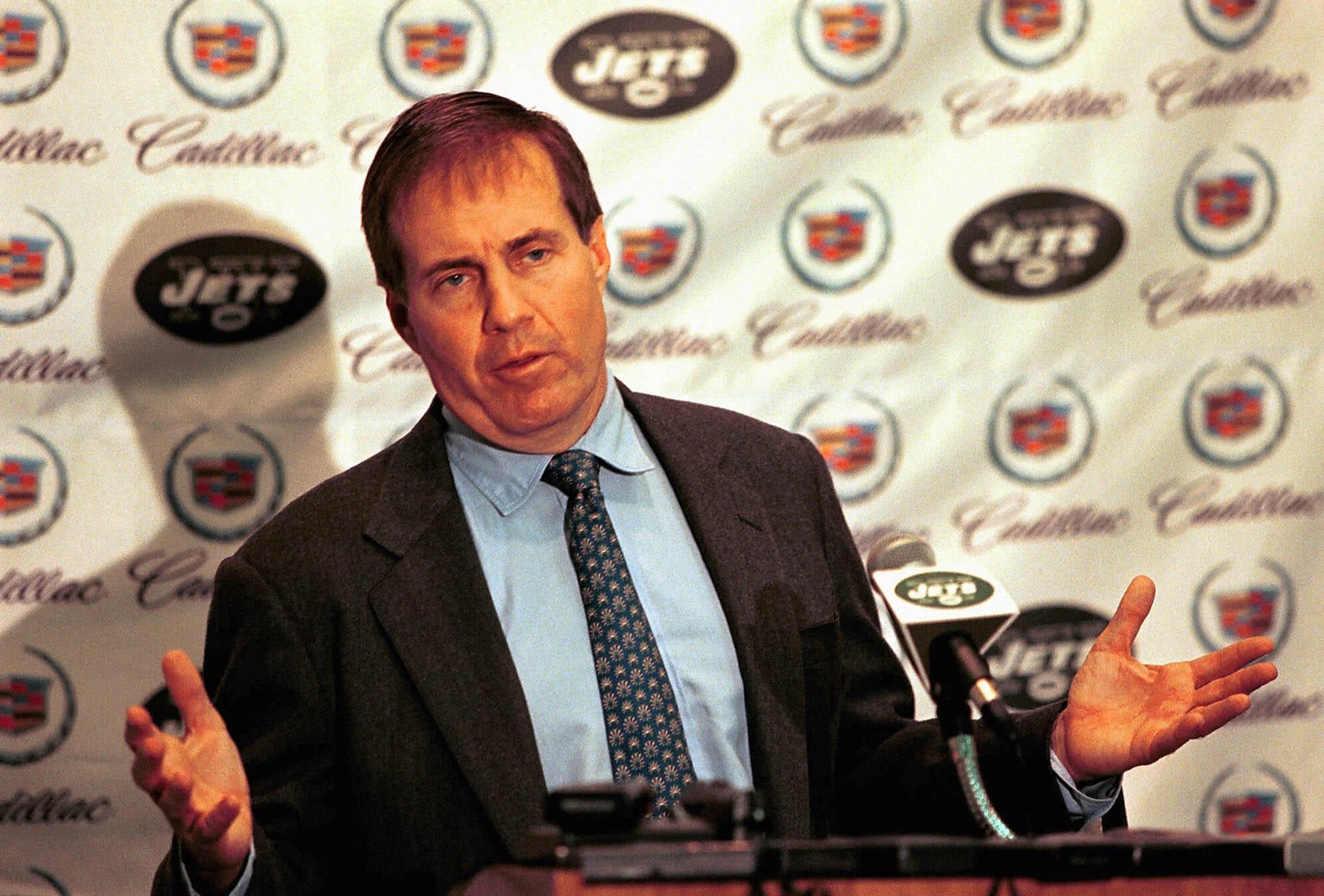
On January 4, 2000, Bill Belichick shocked the NFL when he resigned as head coach of the New York Jets just one day after accepting the job. What was supposed to be the start of a new coaching tenure instead became one of the most memorable moments in league history. Belichick announced his decision by handwriting a resignation message on a napkin that read “I resign as HC of the NYJ” before speaking to reporters and explaining his unexpected choice.
Source: Yahoo Sports
Belichick cited uncertainties surrounding the Jets’ ownership situation after the passing of longtime owner Leon Hess and the pending sale of the team as a major factor in his decision. He was uneasy with how the front office might operate under new leadership, and he chose not to remain in a situation where control and stability were unclear.
Source: Yahoo Sports
Belichick later reflected on the decision as a defining point in his career. In a later interview, he described the moment as “not only most defining, but one of the great moments of my career,” particularly since it led to an opportunity with the New England Patriots that would shape both his future and the league’s landscape.
Source: Sports Illustrated
Belichick’s departure from the Jets set off a series of events that reshaped the AFC East. After a brief legal dispute, the New England Patriots traded a 2000 first-round draft pick and later draft assets to the Jets in exchange for the right to hire Belichick. This trade gave the Patriots their future head coach, setting the stage for one of the most successful coaching tenures in NFL history.
Source: Yahoo Sports
What might have been a footnote in Jets history became a transformative moment for the Patriots and the NFL. Belichick would go on to win multiple championships in New England, while the Jets struggled with coaching turnover and playoff droughts in the years that followed.
Sources: Yahoo Sports, Sports Illustrated
.png)

.jpeg)
