On January 7, 1927, the Harlem Globetrotters played their first road game in Hinckley, Illinois, traveling 48 miles from Chicago in a ramshackle automobile to launch one of the most iconic franchises in sports history.
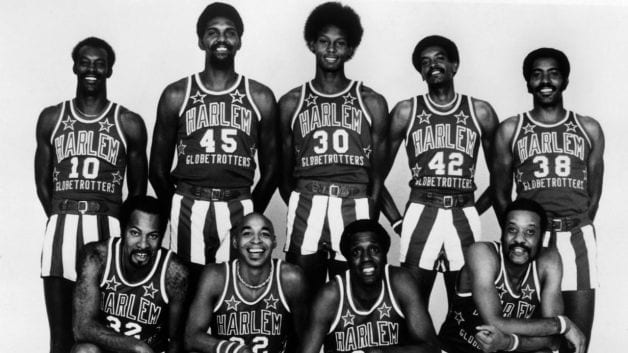
On January 7, 1927, a team of five African American basketball players traveled 48 miles west from Chicago to the small farming village of Hinckley, Illinois, to play their first official road game as the Harlem Globetrotters. The team received $75 for the game, a modest sum that would mark the beginning of a journey spanning nearly 100 years and more than 28,000 games across 124 countries and six continents.
The starting lineup that historic night included Walter "Toots" Wright, Byron "Fat" Long, Willis "Kid" Oliver, Andy Washington, and Al "Runt" Pullins. These five players, traveling in what was described as a ramshackle flivver, had no idea they were launching what would become one of the most recognizable brands in sports and entertainment.
Source: ESPN
Abe Saperstein, a portly promoter from Chicago and the son of a tailor, founded the Harlem Globetrotters in 1926. Saperstein took over coaching duties for a team of African American players originally known as the Savoy Big Five, named after the famous Chicago ballroom where they played their early games. At a time when professional basketball was segregated and only whites were allowed to play on major professional teams, Saperstein saw an opportunity to promote talented Black players.
He decided to name the team after Harlem, the famous African American neighborhood of New York City, despite the team being based in Chicago and never having played a game in New York. The name was a strategic marketing decision designed to capitalize on Harlem's reputation as a center of Black culture and excellence. The New York Renaissance, another prominent African American basketball team that actually was from Harlem, had been successful on the barnstorming circuit, and Saperstein hoped to benefit from that association.
Saperstein personally sewed the team's first red, white, and blue uniforms in his father's tailor shop, emblazoning them with the words "New York" to further the big city illusion. As owner, coach, manager, publicist, and sometimes even substitute player, Saperstein worked tirelessly to book games and promote his team.
Source: History.com
That first winter, the Globetrotters won 101 out of 117 games, introducing many Midwestern audiences to a level of basketball they had never seen before. The team played serious, competitive basketball during those early years, not the comedic style they would later become famous for. They were so dominant that they frequently blew out local opponents, and their exceptional play brought exposure to communities where basketball was still a relatively new sport.
Wendell Smith of the Pittsburgh Courier, one of the nation's prominent African American newspapers, later wrote that Saperstein took five players, a ramshackle flivver, and a tattered road map and started one of the most amazing careers in the sports world.
Source: ESPN
By 1936, the Globetrotters had played more than 1,000 games and appeared in Wisconsin, Minnesota, Iowa, Michigan, Montana, Washington, and North and South Dakota. Interestingly, the team didn't actually play a game in Harlem itself until the late 1960s, decades after taking the neighborhood's name.
Their first national championship appearance came in 1939, when the Globetrotters lost to the New York Renaissance. That same year marked a pivotal change in the team's approach. They began incorporating the silly antics and trick plays they would later become famous for, including ball handling wizardry and on-court comedic routines. The crowds loved it, and Saperstein instructed his players to keep up the clowning around, but only after they had achieved a solid lead. The entertainment would never come at the expense of winning.
Source: History.com
The turning point for the Globetrotters' reputation came in 1940 when they won their first World Basketball Championship, defeating the Chicago Bruins. But their most significant victories came in 1948 and 1949, when the Globetrotters stunned the basketball world by twice defeating the Minneapolis Lakers, the reigning champions of the newly established National Basketball Association.
These victories proved that African American players could compete at the highest level and were socially influential in changing perceptions about racial integration in sports. The wins came at a time when the NBA maintained a whites-only policy, and they helped accelerate the league's decision to integrate.
In 1950, the NBA finally lifted its ban on Black players and began drafting African American athletes. Globetrotter Nathaniel "Sweetwater" Clifton became the first African American player to sign an NBA contract when he joined the New York Knicks in 1950. Clifton, who earned his nickname as a boy because of his love of soft drinks and easy disposition, had played for the Globetrotters from the summer of 1948 to the spring of 1950.
Other Globetrotters who went on to become NBA stars include Wilt Chamberlain, Connie Hawkins, and others. Chamberlain, one of the most dominant players in basketball history, played a full season with the Globetrotters in 1958-59 before joining the NBA, and later said that some of the most pleasant days of his life were spent playing for the team.
Source: Harlem Globetrotters
The Globetrotters embarked on their first international tour in 1950, bringing basketball to audiences around the world. In 1951, they played before their largest crowd ever, 75,000 fans, at Berlin's Olympic Stadium in post-war Germany. Following that trip to Berlin, the U.S. State Department sent a letter to Abe Saperstein officially naming the team "ambassadors of extraordinary goodwill."
The designation was more than symbolic. The Globetrotters performed in the Soviet Union during the Cold War, appeared before Pope Pius XII in Rome, and earned special acknowledgment from Presidents Eisenhower and Ford for their ability to serve mankind around the world through sports diplomacy.
The Globetrotters reached the height of their fame in the 1970s and 1980s. The Harlem Globetrotters cartoon show on CBS earned some of the highest ratings in the history of Saturday morning television. The team also had their own live action variety show, The Harlem Globetrotters Popcorn Machine, and appeared numerous times on ABC's Wide World of Sports. They even made guest appearances on Scooby Doo, Where Are You? introducing the team to new generations of fans.
In 1985, Olympic gold medalist Lynette Woodard joined the Globetrotters, becoming the first woman to ever play on a men's professional basketball team and helping to blaze a path for the WNBA. Woodard was a four-time Kodak All-American at the University of Kansas and the all-time leading scorer in women's college basketball with 3,649 points.
Source: Harlem Globetrotters
After Saperstein's death in 1966, the team was sold to a group of Chicago businessmen for $3.7 million. They later sold it to Metro Media for $11 million. In 1993, former Globetrotters player Mannie Jackson purchased the team, becoming the first African American to own a major international sports and entertainment organization. Jackson tripled the team's revenue in three years and quadrupled its size in five.
In 2002, the Globetrotters received basketball's highest honor with induction into the Naismith Basketball Hall of Fame. They are the only team to have ever been inducted, in addition to 13 individual players with ties to the organization. In 2013, Herschend Family Entertainment, the largest family-owned themed attractions company in the United States, purchased the team.
Source: Harlem Globetrotters
In 2016, on the 90th anniversary of their first game, the Globetrotters returned to Hinckley, Illinois, and erected a commemorative sign near Hinckley-Big Rock High School. The sign, standing 10 feet high by 9 feet wide, celebrates the historic site where it all began. The small farming community proudly displays the marker that reads "Site of the first-ever Harlem Globetrotters road game."
January 7, 1927, marked the beginning of a remarkable journey from a small town in Illinois to the world stage. What started as five players traveling 48 miles in an old car for $75 evolved into a global phenomenon that has entertained more than 148 million fans across six continents. The Globetrotters have played more than 28,000 games, own the best winning percentage in professional sports history at .987, and continue to perform 400-plus games per year in more than 25 countries.
From breaking racial barriers to becoming goodwill ambassadors, from serious competitors to beloved entertainers, the Harlem Globetrotters transformed basketball and popular culture. Their first game in Hinckley may have been humble, but it launched a legacy that continues to inspire and entertain audiences around the world nearly a century later.
.png)

.jpeg)
