On this date, the Green Bay Packers defeated the Kansas City Chiefs 35-10 in the first AFL-NFL World Championship Game, later known as Super Bowl I. Backup receiver Max McGee, playing despite a severe hangover, caught seven passes for 138 yards and two touchdowns, including the first touchdown in Super Bowl history, leading the Packers to victory before 63,036 fans at the Los Angeles Memorial Coliseum.
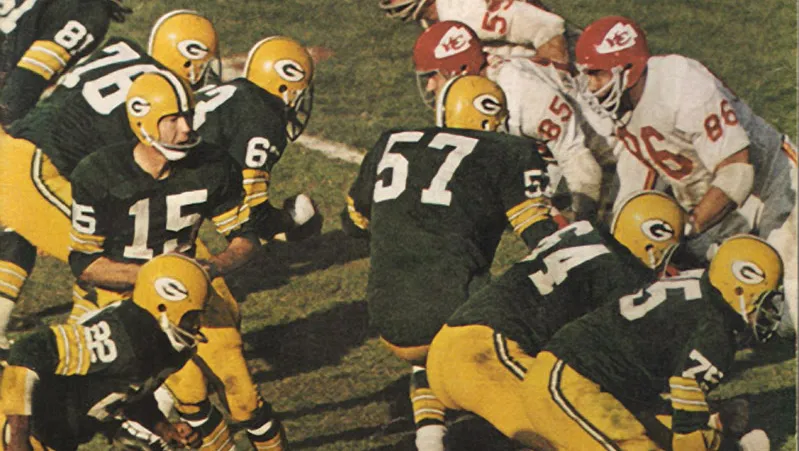
On a warm, windless afternoon at the Los Angeles Memorial Coliseum, professional football stepped into uncharted territory. The Green Bay Packers, champions of the established National Football League, faced the Kansas City Chiefs, standard-bearers of the upstart American Football League, in the first-ever AFL-NFL World Championship Game. The contest would not officially become known as "Super Bowl I" until years later, but what happened that day would launch what is now North America's most-watched annual sporting event. The Packers dominated 35-10, but the road to that final score was more dramatic than anyone expected.
Despite the historic nature of the matchup, only 63,036 fans filled the 94,000-seat Los Angeles Memorial Coliseum. More than 32,000 seats sat empty. The game was broadcast by both CBS and NBC, the only time in Super Bowl history that two networks would carry the same game simultaneously. An estimated 60 million viewers tuned in, dwarfing the attendance at the stadium.
Nobody expected much from Max McGee on game day. The 34-year-old backup wide receiver had caught just four passes all season and did not expect to play a single snap. So the night before the biggest game in professional football history, McGee broke curfew. After the 11 p.m. bed check, he snuck out and spent the night bar-hopping with two flight attendants he had met in the lobby. He returned at 6:30 in the morning, passing an early-rising Bart Starr in the lobby.
At the pregame meeting, McGee pulled aside starting receiver Boyd Dowler. "Whatever you do, don't go down today," he said. "I was out all night and I had a few more drinks than I should have." McGee was so certain he would not play that he did not even bring his helmet out of the locker room.
On Green Bay's second drive, Dowler separated his shoulder while making a block. Coach Vince Lombardi called for McGee, who had to borrow a helmet from a teammate. On the next series, quarterback Bart Starr threw a pass to McGee on an inside route. The ball was behind him, but McGee reached back with one hand, snapped it to his chest with a spectacular grab, and raced 37 yards into the end zone. The first touchdown in Super Bowl history came from a man nursing a serious hangover who had gotten back to his hotel room just hours before kickoff.
Kansas City refused to fold. Despite being 14-point underdogs, quarterback Len Dawson capped a 66-yard drive with a seven-yard touchdown pass to fullback Curtis McClinton. The game was tied 7-7. But the Packers had been probing the Chiefs' defense, and Starr had found weaknesses at cornerback. Jim Taylor swept 14 yards for Green Bay's second touchdown. Kansas City managed a 31-yard field goal, but the Packers led 14-10 at halftime.
Then the second half began, and the dream of a Super Upset ended. Elijah Pitts scored on a five-yard run to push the lead to 21-10. McGee struck again with his second touchdown catch from 13 yards out. In the fourth quarter, Pitts plowed over from the one-yard line. The final score stood at 35-10.
McGee finished with seven receptions for 138 yards and two touchdowns, one of the greatest receiving performances in Super Bowl history. Yet it was Starr, who completed 16 of 23 passes, who was named MVP. Many observers believed McGee deserved the honor.
After the game, coach Vince Lombardi delivered his honest assessment of the Chiefs: they "doesn't compare with the top NFL teams." It was harsh but reflected prevailing opinion. The AFL, founded in 1960, was still fighting for legitimacy. But two years later, Joe Namath led the New York Jets to a stunning upset over Baltimore in Super Bowl III, proving the younger league could compete. In 1970, the leagues officially merged, and the Super Bowl became the annual championship game between the AFC and NFC.
Despite the half-empty stadium and experimental nature of the game, Super Bowl I established a tradition that would grow into a cultural phenomenon. Max McGee, the hungover backup who was not supposed to play, became the first hero in Super Bowl history. He played one more season, earning another ring when Green Bay defeated Oakland 33-14 in Super Bowl II, then retired having bookended the greatest performances of his career in the first two Super Bowls ever played.
.png)