On January 9, 1976, Sylvester Stallone began filming Rocky in Philadelphia, launching a low-budget underdog story that would become one of cinema's greatest rags-to-riches tales both on and off screen.
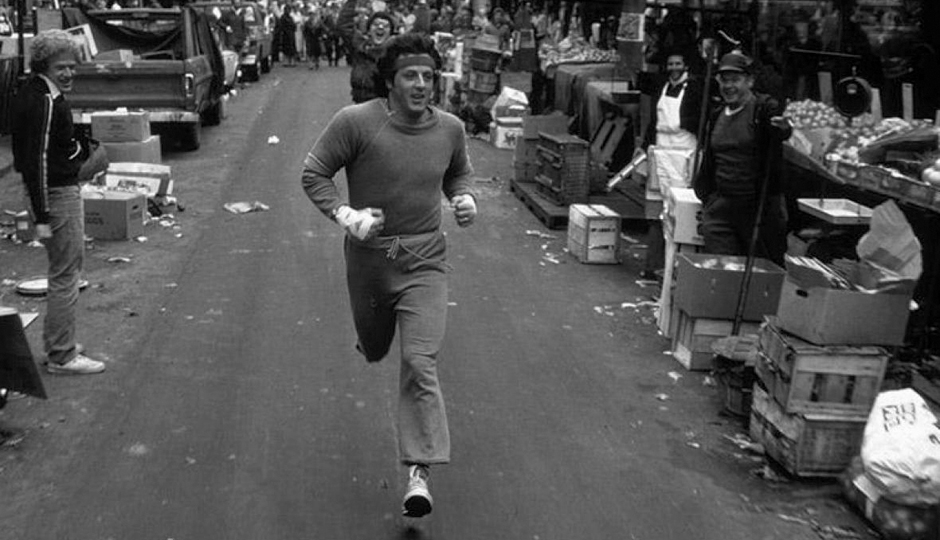
On January 9, 1976, Sylvester Stallone arrived in Philadelphia to start shooting Rocky, a film that would transform his life and create one of cinema's most enduring franchises. At the time, Stallone was a struggling actor living in a seedy Hollywood apartment with $106 in the bank on his 29th birthday. Just months later, he would be an Oscar-nominated star.
The inspiration struck in March 1975 when Stallone watched the Muhammad Ali vs. Chuck Wepner fight. Wepner, a club fighter from New Jersey, had no business in the ring with Ali, yet he went the distance and even knocked the champion down. "We had witnessed an incredible triumph of the human spirit," Stallone recalled. That night, he locked himself in a room and wrote the first draft of Rocky in just three and a half days.
Source: Total Rocky
Producers Irwin Winkler and Robert Chartoff quickly saw potential in Stallone's script, offering him $75,000 for the screenplay. But they wanted a big-name actor like Burt Reynolds, James Caan, or Ryan O'Neal to play Rocky. For Stallone, this was non-negotiable.
The offer climbed to $125,000, then $300,000, more money than Stallone had ever seen. He refused every time. "I would sooner burn the thing than have anyone else play Rocky Balboa," he said. "Not for a million dollars."
Finally, the producers agreed to let Stallone star in the movie, but with a shoestring budget of less than $1 million. Stallone had won his first real fight, but now he had to prove he could go the distance.
Source: Total Rocky
Director John G. Avildsen shot Rocky in just 28 days on the tiny budget. The production couldn't afford permits, extras, or proper locations, so scenes were filmed guerrilla-style on Philadelphia's streets. "We would travel in a van, and whenever Avildsen saw a colorful location, we'd jump out and film," Stallone explained.
This spontaneous approach led to iconic moments. When Rocky ran through the Italian Market, a real vendor threw an orange at him, not knowing they were in a movie. The training montage covered about 20 miles of Philadelphia in just minutes, creating a visual and emotional masterpiece that would define sports movies for generations.
The film became the first feature-length movie to employ the Steadicam, with Garrett Brown's camera rig allowing smooth, moving shots that made Rocky's run through Philadelphia feel immersive and real, especially when he reached the Philadelphia Museum of Art steps.
Source: History.com
The tiny budget forced creative decisions that made Rocky better. The ice skating scene, where Rocky takes Adrian (Talia Shire) on their first date, was originally planned with 300 extras. When money ran out, they filmed with just Stallone and Shire alone on the ice, creating one of the film's most heartfelt moments.
The final fight crowd consisted mostly of crew members and friends huddled in one section to make the venue look fuller. The movie's original ending was scrapped when they barely had enough film left, leading to the last-minute "Adrian!" moment that became one of cinema's most unforgettable endings.
Source: Total Rocky
Rocky became the sleeper hit of 1976, dividing critics but captivating audiences nationwide. Stallone, who received 10 percent of the grosses, became both rich and famous overnight. At the 1977 Academy Awards, Rocky earned 10 nominations, including Best Actor and Best Original Screenplay for Stallone.
The film won three Oscars: Best Picture, Best Director for Avildsen, and Best Film Editing. Stallone's journey from struggling actor to Oscar-nominated writer and star in less than a year was unprecedented, putting him in the same company as Orson Welles and Charlie Chaplin as actors who had written their own Oscar-nominated films.
"I know I'll never have a voice like that again," Stallone later reflected. "That's one thing I'll always cherish about that character, because if I say it you won't believe it, but when Rocky says it, you know it's the truth."
January 9, 1976, marked the beginning of a cultural phenomenon that would spawn multiple sequels and inspire countless underdog stories. What started as a broke actor's desperate gamble became one of the most beloved sports films of all time, proving that sometimes the best stories come from those who refuse to give up.
Source: Total Rocky
.png)

.jpeg)