On January 5, 1933, construction began on the Golden Gate Bridge in San Francisco, marking the start of a legendary engineering project that would become one of the world’s most iconic landmarks.
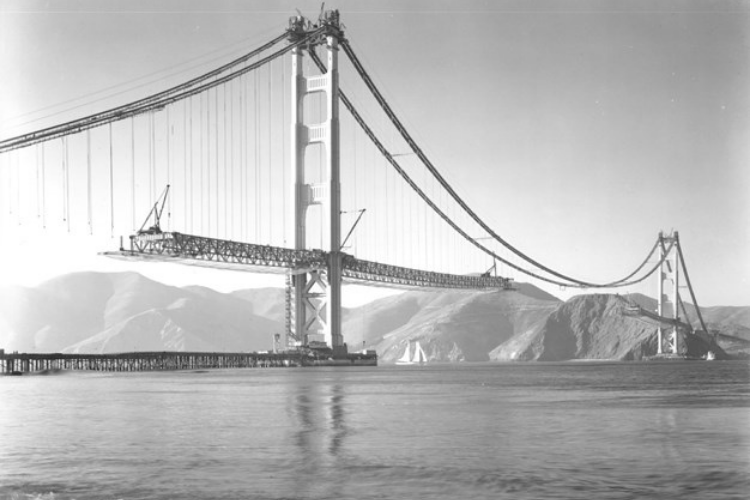
On January 5, 1933, construction officially began on what would become one of the most recognizable bridges in the world, the Golden Gate Bridge in San Francisco, California. The bridge would span the Golden Gate Strait, the narrow entrance between San Francisco Bay and the Pacific Ocean, and connect the city to Marin County.
Plans for a bridge across the Golden Gate Strait had been circulating since the 19th century, but engineers and financiers debated whether it was even possible to build a span that long over turbulent waters and strong winds. The idea gained momentum during the late 1920s when a new generation of engineers and architects believed advances in technology made it feasible. Chief engineer Joseph B. Strauss helped bring the vision to life with a design that combined strength and elegance. Strauss worked with architects and engineers to refine the plans, ultimately producing a suspension bridge that was both practical and beautiful.
On January 5, 1933, workers began construction on the enormous bridge foundations, beginning a task that would test the limits of engineering at the time. The project required building massive concrete piers in deep water, spinning miles of steel cables, and assembling sections over open ocean. All of this took shape during the Great Depression, providing jobs and inspiration when both were sorely needed.
Source: History.com
Although construction would continue for more than four years, this first day marked the start of a remarkable achievement. When the Golden Gate Bridge finally opened in May 1937, it was the longest suspension bridge main span in the world, a title it held until 1964. The bridge quickly became an international symbol of American innovation and a defining landmark of the West Coast.
The image of its international orange towers rising over foggy waters remains one of the most enduring pictures in modern architecture and engineering.
.png)