On January 4, 1837, Samuel Colt sold his first .44-caliber revolvers to the U.S. government, securing a contract that revived his company and helped popularize the repeating handgun in American history.
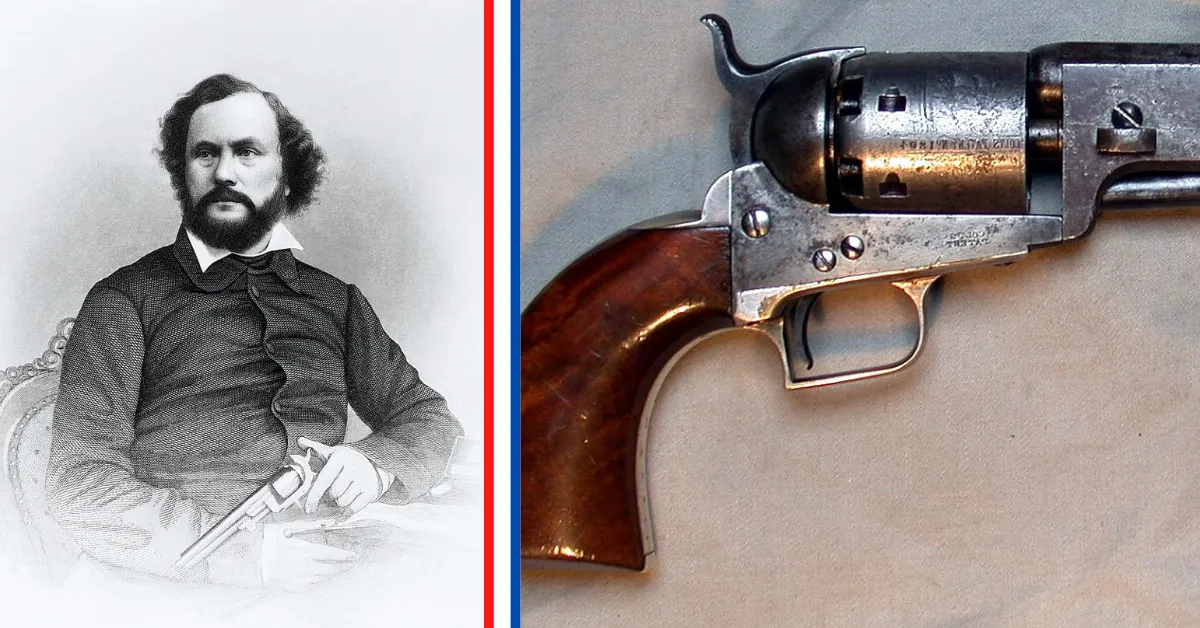
On January 4, 1837, inventor Samuel Colt secured a landmark contract to sell 1,000 .44-caliber revolvers to the United States government, reviving his struggling business and changing the future of firearms in America. The deal helped establish Colt’s revolvers as a reliable and influential weapon in U.S. military history.
Before Samuel Colt’s innovation, handguns were generally expensive, inaccurate, and limited to a single shot. Most Americans considered short-barreled firearms impractical for everyday use, and they played a minimal role in frontier life and military engagements. Colt’s vision was to create a more effective repeating handgun that could fire multiple shots without reloading after each one.
In 1836, Colt patented his percussion-repeating revolver, featuring a single rifled barrel mated to a rotating cylinder that held multiple chambers. When the hammer was cocked, the cylinder advanced automatically to align the next chamber with the barrel, allowing several shots in succession without manual reloading. This mechanism significantly increased firing speed and reliability compared with earlier single-shot pistols.
The January 4, 1837 contract provided Colt with a lifeline for his manufacturing company. Government orders gave him the cash flow and credibility needed to build a factory and scale production. The .44-caliber revolvers would go on to be used by frontier units and soldiers in a variety of conflicts, ensuring that Colt’s name became synonymous with the American handgun.
Source: History.com
Colt’s repeating revolver played a key role in shifting perceptions about handguns in the United States. What began as an unproven invention became one of the most widely recognized firearms of the 19th century, shaping both military armaments and public life as the American West expanded.
.png)