On this date the U.S. Surgeon General Luther Terry released a landmark government report establishing a definitive link between cigarette smoking and cancer, marking a turning point in public health history.
On January 11, 1964, United States Surgeon General Luther Terry released one of the most significant documents in medical history at a packed press conference in Washington, D.C. The report, titled Smoking and Health: Report of the Advisory Committee to the Surgeon General, concluded unequivocally that cigarette smoking was causally related to lung cancer in men and a probable cause in women. Knowing the announcement would be a bombshell, Terry strategically chose to release it on a Saturday to minimize the immediate impact on the stock market while maximizing coverage in Sunday newspapers.
Source: Profiles in Science - National Library of Medicine
The report was commissioned two years earlier by President John F. Kennedy, who asked Dr. Terry to appoint a committee to scrutinize the medical literature on smoking's health consequences. The 10-member advisory committee reviewed more than 7,000 scientific articles with assistance from over 150 consultants between November 1962 and January 1964. Their findings were stark: cigarette smoking was responsible for a 70 percent increase in the mortality rate of smokers compared to non-smokers, and average smokers faced a nine- to ten-fold risk of developing lung cancer.
Source: CDC - A History of the Surgeon General's Reports
While the link had long been suspected, public awareness was limited before 1964. A Gallup Survey from 1958 found that only 44 percent of Americans believed smoking caused cancer. By the 1930s, physicians had noticed an increase in lung cancer cases, and medical studies published in Great Britain in the late 1940s raised serious concerns. In 1957, Surgeon General Leroy E. Burney had declared it the official position of the U.S. Public Health Service that evidence pointed to a causal relationship between smoking and lung cancer, but no comprehensive governmental report had been issued.
Source: HISTORY
The committee's formation was carefully designed to avoid accusations of bias. Cigarette manufacturers were allowed to veto anyone suggested to serve on the Advisory Committee, and no one who had publicly stated that cigarettes cause harm was permitted to join. Half of the members were smokers, half were non-smokers, and none specialized in smoking and health research. As Dr. Terry later recalled, the report "hit the country like a bombshell. It was front page news and a lead story on every radio and television station" in the United States and abroad.
Source: American Journal of Public Health
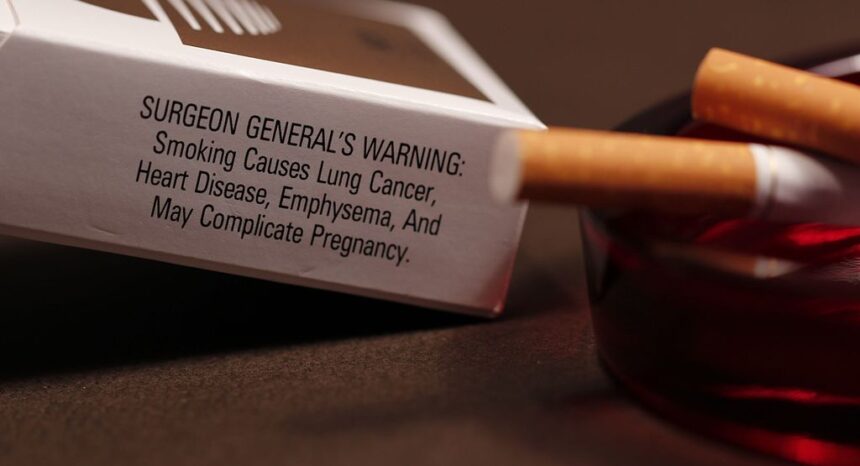
The report's release became one of the top news stories of 1964 and triggered immediate policy changes. By 1968, 78 percent of Americans believed smoking caused cancer, a dramatic increase from just a decade earlier. In 1965, Congress passed the Federal Cigarette Labeling and Advertising Act, requiring the first warning labels on cigarette packages. The Public Health Cigarette Smoking Act of 1969 followed, mandating warnings in the name of the Surgeon General and banning cigarette advertisements on radio and television. Studies show that smoking decreased by approximately 11 percent between 1965 and 1985.
Source: Wikipedia - Smoking and Health
While the report marked a watershed moment in the fight against tobacco, the battle was far from over. The tobacco industry spent millions lobbying against anti-smoking laws and regulations throughout the following decades. Despite these efforts, the 1964 report launched what would become a major public health success story. Nearly half of all living adults who ever smoked have since quit, and by 2023, more than 25 states had passed laws banning smoking in enclosed public spaces. However, cigarette smoking remains the nation's number one avoidable health problem, accounting for approximately 440,000 deaths per year.
Source: CancerNetwork
January 11, 1964, stands as a pivotal date in American medical history. What began as a scientific review of existing literature became the catalyst for decades of public health advocacy, policy reform, and cultural change surrounding tobacco use. The report transformed smoking from a socially accepted habit into a recognized public health crisis, forever altering how Americans think about cigarettes and their impact on health.
.png)