On this date, Jimmy Wales and Larry Sanger launched Wikipedia as a free online encyclopedia that anyone could edit. What began as a side project to the failing Nupedia quickly grew into the world's largest reference work, with over 60 million articles in more than 300 languages. Despite criticisms about accuracy and bias, Wikipedia has become one of the most visited websites globally and transformed how humanity accesses and shares knowledge.
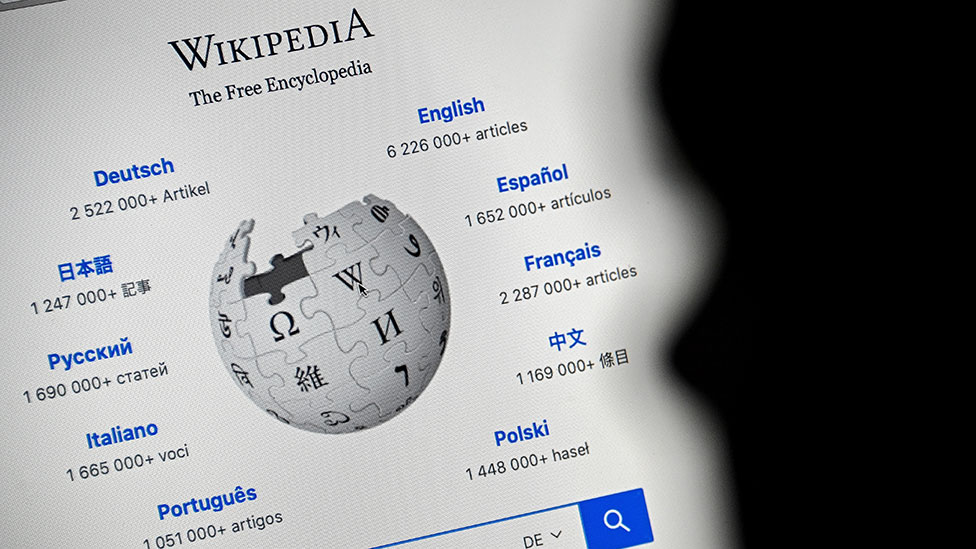
On a Monday morning in San Diego, internet entrepreneur Jimmy Wales and philosophy graduate student Larry Sanger hit "publish" on a radical experiment. They launched Wikipedia, a free online encyclopedia that anyone could edit. The first entry was simply "Hello World." One of the first articles was about the letter Q. Within five days, there were 200 articles. By the end of the month, there were 600. Nobody imagined that this quirky side project would become the world's largest reference work, with more than 60 million articles in over 300 languages, attracting 1.8 billion visitors monthly. The encyclopedia that anyone could edit would transform how humanity shares and accesses knowledge.
The story of Wikipedia begins with failure. In March 2000, Wales launched Nupedia, envisioning a free online encyclopedia written by experts and subjected to rigorous peer review. He hired Sanger, a doctoral student in philosophy at Ohio State University, as editor-in-chief. The concept was sound. The execution was glacial.
Despite a mailing list of over 2,000 interested editors, Nupedia produced only 12 articles in its first year. The multi-step peer-review process strangled progress. Wales and Sanger watched in frustration as their ambitious project stalled. They needed a solution, and fast.
On January 2, 2001, Sanger met his friend Ben Kovitz for dinner. Kovitz was a computer programmer and devotee of Ward Cunningham's WikiWikiWeb, the first wiki software created in 1995. When Sanger complained about Nupedia's snail pace, Kovitz explained the wiki concept: a website that anyone could edit instantly, without approval or review.
Sanger was electrified. A wiki could break Nupedia's bottleneck. Instead of waiting months for experts to review submissions, articles could be written and improved collaboratively by anyone. Sanger rushed to propose the idea on the Nupedia mailing list on January 10. "This is not an indecent proposal," he wrote, half-joking. "It's an idea to add a little feature to Nupedia." He called wikis "the ultimate 'open' and simple format for developing content."
The reaction from Nupedia's expert contributors was swift and hostile. They dismissed the idea as ridiculous. Mixing amateur content with professionally researched material would compromise Nupedia's integrity, they argued. But Wales saw the potential. On January 11, Sanger suggested the name: a portmanteau of "wiki" (Hawaiian for "quick") and "encyclopedia." The domain names wikipedia.com and wikipedia.org were registered on January 12 and 13.
Wikipedia formally launched on January 15, 2001, at the domain www.wikipedia.com. It was announced as a side project to Nupedia, a place where the public could write articles that would then be fed into Nupedia's review process. The first edit read simply "Hello World." The concept was straightforward: anyone with internet access could create or edit articles instantly. No credentials required. No gatekeepers. Just type and click save.
The growth was immediate and astonishing. Within the first month, Wikipedia had 600 articles. By February, there were 1,000. The wiki format unleashed a torrent of content that Nupedia's formal process had constrained. Articles on obscure topics, breaking news, and popular culture appeared alongside entries on science and history. By the end of 2001, Wikipedia had 20,000 articles and 18 language editions.
Nupedia's experts wanted nothing to do with it. The Nupedia advisory board called Wikipedia absurd. But the public embraced it. When the September 11 attacks occurred, Wikipedia editors created approximately 100 related articles. Yahoo! linked to Wikipedia's coverage on its homepage, and traffic spiked. The world was discovering a new way to build knowledge.
What made Wikipedia revolutionary was its rejection of traditional authority. Encyclopaedia Britannica employed expert scholars to write carefully vetted articles. Wikipedia employed everyone. The assumption underlying traditional encyclopedias was that knowledge required gatekeepers. Wikipedia's assumption was that, given the right tools and rules, communities could police themselves.
The wiki software made editing simple. Anyone could click "edit," make changes, and see them appear instantly. Every change was tracked in a public edit history. If someone vandalized an article, anyone else could revert it just as easily. The transparency was radical. Ward Cunningham, creator of the first wiki, had called it "the simplest online database that could actually work."
Sanger formulated Wikipedia's "Neutral Point of View" policy in 2001, establishing that articles should present information fairly without advocating any particular viewpoint. This became a cornerstone of Wikipedia's reliability. Wales confirmed that Wikipedia would never run commercial advertising, keeping it free from the distortions that plague ad-driven content.
Source: Los Angeles Public Library
Wikipedia's rapid growth brought problems. In 2002, Bomis reduced funding for the project. Sanger was laid off in March and departed, later becoming critical of Wikipedia and starting competing projects. Wales assumed greater control. The founders later disputed who deserved credit, with Wales claiming sole founder status and Sanger defending his role as co-founder. Early press releases from 2002 to 2004 identified both as founders, but the dispute became public and bitter.
In 2005, Wikipedia suffered its first major credibility crisis. An anonymous editor falsely implicated journalist John Seigenthaler in the Kennedy assassinations. The hoax went undetected for four months. Seigenthaler called Wikipedia "a flawed and irresponsible research tool." Wales tightened registration and oversight policies. The incident highlighted Wikipedia's fundamental tension: openness enabled rapid growth but invited abuse.
Yet studies found Wikipedia surprisingly accurate. In 2005, Nature published a peer review comparing 42 science articles from Encyclopaedia Britannica and Wikipedia. Wikipedia's level of accuracy approached Britannica's. Time magazine declared Wikipedia "the biggest and possibly the best encyclopedia in the world."
By 2007, Wikipedia had surpassed two million English articles, becoming the largest encyclopedia ever assembled, exceeding even the 1408 Yongle Encyclopedia that had held the record for almost 600 years. The last print edition of Encyclopaedia Britannica appeared in 2012 with only 65,000 articles. Wikipedia now contains over 60 million articles in more than 300 languages, written and edited by millions of unpaid volunteers.
Wikipedia is far from perfect. It struggles with bias, vandalism, and gaps in coverage. Its contributor base is overwhelmingly male and Western. Articles on contentious topics are battlegrounds. The writing is often dull and formulaic. Critics point to ideological bias and lack of expertise. Yet Wikipedia remains one of the internet's greatest success stories, a nonprofit endeavor sustained by small donations and volunteer labor.
Every fact on Wikipedia must cite a reliable published source. This means Wikipedia aggregates knowledge created by others, journalists and scholars who research and write for payment. Wikipedia itself produces no original research. It is a compendium, a free and universally accessible index to human knowledge.
Source: Los Angeles Public Library
Twenty-four years after its launch, Wikipedia remains one of the ten most visited websites globally. It has survived where countless dot-com projects failed because it rejected the commercial model. No ads. No paywalls. No profit motive. Just millions of people freely sharing what they know.
The wiki concept that Cunningham created and that Wikipedia popularized has spread everywhere. Wikis now organize knowledge in countless domains, from fan communities documenting fictional universes to companies managing internal documentation. The idea that communities can self-organize to create reliable information has proven remarkably durable.
Wales still serves on the Wikimedia Foundation Board of Trustees. Sanger has become an outspoken critic of what he views as Wikipedia's bias and lack of accountability. But their creation endures, imperfect and indispensable, a monument to the possibility that knowledge can be democratized without being degraded.
On January 15, 2001, two men in San Diego launched a website that let anyone edit an encyclopedia. The experts said it would never work. Today, when humanity has a question, Wikipedia is often the first place we look for an answer.
.png)