On January 9, 1861, Confederate forces fired on the Union merchant ship Star of the West as it attempted to deliver supplies to Fort Sumter in Charleston Harbor, South Carolina, marking the first shots exchanged between North and South.
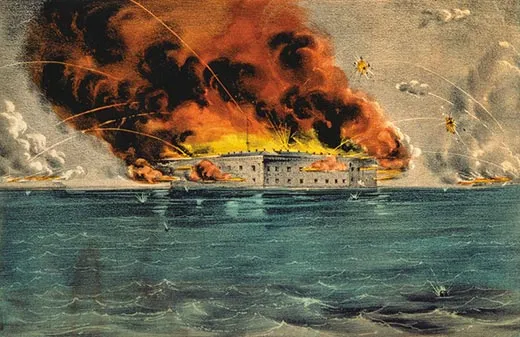
On the morning of January 9, 1861, the Union merchant ship Star of the West approached Charleston Harbor carrying supplies for the Federal garrison at Fort Sumter. As Captain John McGowan steered the vessel into the main shipping channel, two cannon shots roared from a South Carolina battery on Morris Island. The gunner was George E. Haynsworth, a cadet at The Citadel in Charleston. These shots represented the opening salvo of what would become America's bloodiest conflict.
More shots followed, and the ship suffered a minor hit. Inside Fort Sumter, Major Robert Anderson and his 80 soldiers watched but did not respond. Had Anderson fired back in support of the ship, the Civil War might have started on that day. Instead, Captain McGowan was forced to abandon his mission and turn back, leaving Fort Sumter's garrison without the desperately needed supplies.
The Star of the West had left New York on January 5, 1861, carrying supplies for Fort Sumter. President James Buchanan had chosen a civilian merchant ship instead of a military transport to avoid provoking South Carolina, which had seceded from the Union just weeks earlier on December 20, 1860. The decision proved futile.
After the ship departed, Secretary of War Joseph Holt received a dispatch from Major Anderson stating that supplies were not immediately needed and warning that secessionists were building gun emplacements overlooking the harbor's main shipping channel. Holt realized the ship was sailing into great danger and tried desperately to recall it, but his efforts failed. Anderson remained unaware that the Star of the West was approaching until he saw it entering the harbor that morning.
The incident could have triggered immediate war. The shots from Morris Island represented an unmistakable act of aggression against Federal property and personnel. Yet both sides pulled back from the brink. Anderson's decision not to return fire prevented the situation from escalating into full-scale battle.
The incident resulted in strong rhetoric on both sides but stopped short of war. South Carolinians had demonstrated their willingness to use force to resist Federal authority. Northern newspapers condemned the attack as treason, while Southern voices justified it as defending their sovereignty. The standoff at Fort Sumter would continue for three more months, with tensions mounting as the nation held its breath.
January 9, 1861, proved to be a harbinger of the violence to come. Though the Civil War would not officially begin until Confederate forces opened fire on Fort Sumter itself on April 12, 1861, the shots fired at the Star of the West marked the first exchange of fire between North and South, setting the stage for four years of devastating conflict.
Source: History.com
.png)