On January 7, 1959, the United States officially recognized the new provisional government of Cuba led by Dr. Manuel Urrutia, just six days after revolutionaries overthrew dictator Fulgencio Batista, setting the stage for one of the most tumultuous relationships in American diplomatic history.
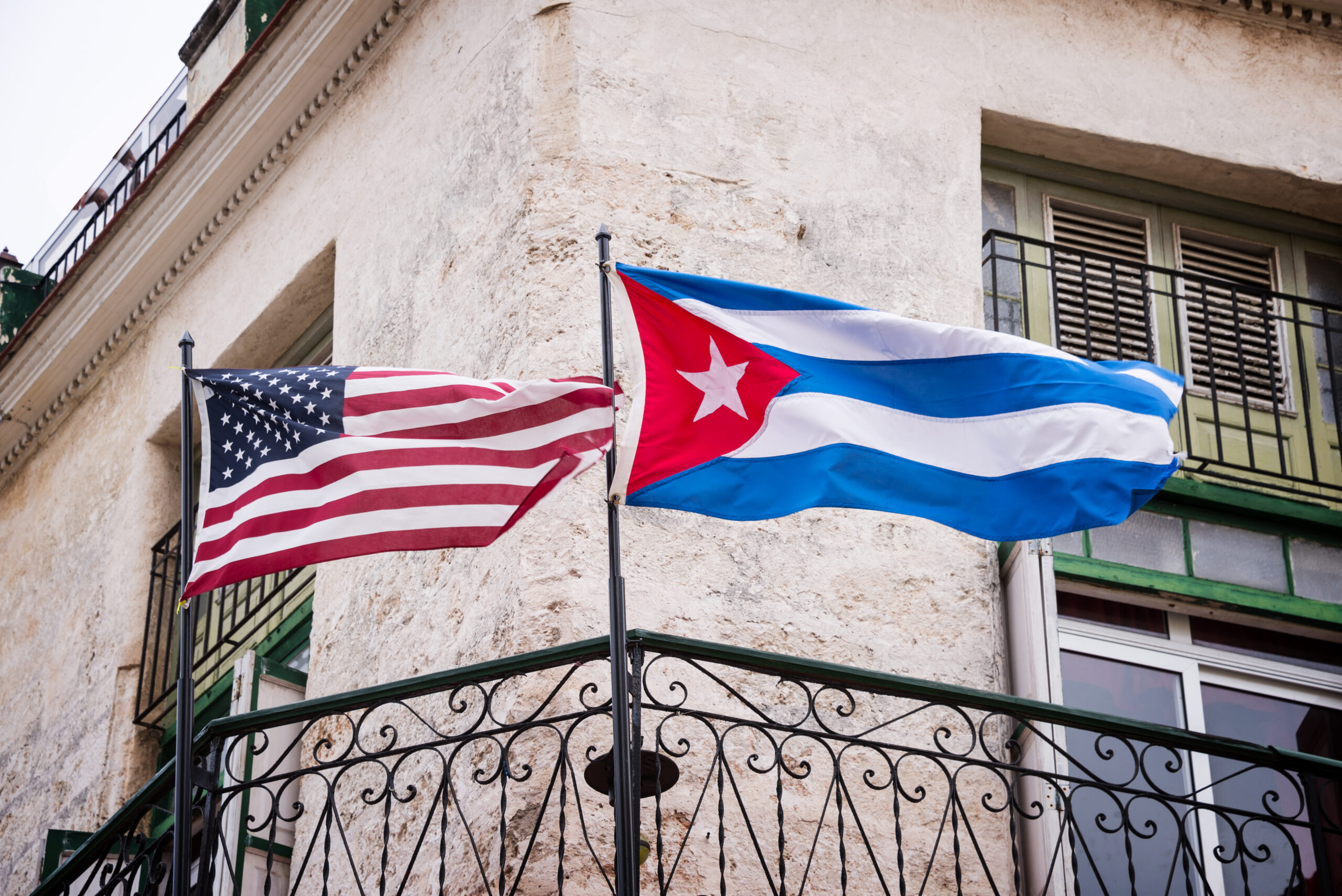
On January 7, 1959, at 5:00 p.m., the United States formally recognized the new government of Cuba under Provisional President Manuel Urrutia Lleo. The decision came just six days after Fulgencio Batista fled the country on January 1, 1959, as revolutionary forces led by Fidel Castro swept across the island and seized control of the government.
Secretary of State John Foster Dulles recommended recognition to President Dwight D. Eisenhower, stating in his memorandum that the provisional government appeared free from Communist influence and intended to pursue friendly relations with the United States. Ambassador Earl E. T. Smith delivered the formal note of recognition to Cuban Minister of State Roberto Agramonte, with the State Department maintaining an open telephone line to the embassy so they could release the news immediately.
Source: Office of the Historian
Batista had ruled Cuba since seizing power in a military coup on March 10, 1952, overthrowing the democratically elected government of President Carlos Prío Socarrás. His regime was marked by widespread corruption, authoritarian rule, and close ties to American business interests, which controlled much of Cuba's economy, particularly the lucrative sugar industry.
Castro began his revolutionary campaign against Batista with a failed attack on the Moncada Army Barracks on July 26, 1953. After his release from prison in 1955, Castro regrouped in Mexico and returned to Cuba in November 1956 with 82 revolutionaries aboard the yacht Granma. Most were killed shortly after landing, but Castro, his brother Raúl Castro, and Che Guevara escaped to the Sierra Maestra mountains, where they built a guerrilla army.
By late 1958, mounting military defeats, widespread popular opposition, and an American arms embargo had left Batista's position untenable. He fled Cuba in the early morning hours of January 1, 1959, taking refuge first in the Dominican Republic and later in Spain.
Source: Britannica
While Castro led the revolutionary forces that toppled Batista, he initially remained in the background of the new government. Dr. Manuel Urrutia, a respected judge who had ruled in favor of Castro's revolutionaries in an earlier trial, was installed as provisional president. On January 8, 1959, Castro arrived triumphantly in Havana after a week-long victory tour across Cuba. The following month, he was officially sworn in as Prime Minister.
American officials initially viewed the revolution with cautious optimism. The United States had grown increasingly uncomfortable with Batista's brutality and corruption, and many hoped that Castro's movement would restore democracy to Cuba. The Eisenhower administration believed it could work with the new regime and protect American economic interests on the island.
Ambassador Earl E. T. Smith had expressed reservations about Castro's politics and the uncertain direction of the revolution, but Secretary Dulles overruled these concerns, prioritizing swift recognition to maintain American influence in Cuba.
Source: History.com
The optimism surrounding recognition proved short-lived. Within months of taking power, Castro began implementing radical reforms that alarmed Washington. In May 1959, Cuba passed its first agrarian reform law, which seized large estates and redistributed land to peasants. Many of these estates belonged to American companies and wealthy Cuban landowners with ties to the United States.
Castro's government soon began nationalizing American-owned businesses without compensation. By July 1960, Cuba had seized 21 sugar mills, along with utilities, banks, and other major industries. American companies lost hundreds of millions of dollars in assets, souring relations between the two countries.
Roy R. Rubottom Jr., the Assistant Secretary of State for Inter-American Affairs, later characterized the evolution of relations from January to March 1959 as the "honeymoon period" of the Castro government. By April, he noted, a downward trend had become evident. By June, American officials had concluded it was not possible to achieve their objectives with Castro in power and had begun planning for regime change.
Castro did not publicly declare himself a communist until 1961, but his government steadily aligned itself with the Soviet Union throughout 1959 and 1960. As early as September 1959, Soviet intelligence agents were observed in Cuba, marking the beginning of a close relationship that would define the next three decades of Cuban politics.
In April 1959, Castro visited the United States, but President Eisenhower refused to meet with him, instead departing to play golf. The snub reflected growing American suspicions about Castro's intentions, though the administration still hoped to influence the direction of his government.
By January 1960, the Eisenhower administration had begun actively plotting Castro's overthrow. The Central Intelligence Agency started arming guerrillas inside Cuba in May 1960, and the United Kingdom was persuaded to cancel a sale of fighter aircraft to the Cuban government.
The deterioration of relations accelerated throughout 1960. On January 3, 1961, the United States severed diplomatic relations with Cuba, less than two years after recognition. In February 1962, President Kennedy extended the trade restrictions into a full economic embargo, which banned all American trade with Cuba and prohibited American citizens from traveling to the island or conducting financial transactions with Cuban entities.
In April 1961, the United States sponsored the Bay of Pigs invasion, an attempted overthrow of Castro's government by Cuban exiles trained and equipped by the CIA. The invasion failed disastrously, with most of the exile force killed or captured within three days. The failure strengthened Castro's position and pushed Cuba even closer to the Soviet Union.
The crisis reached its peak in October 1962 during the Cuban Missile Crisis, when American intelligence discovered that the Soviet Union had deployed nuclear missiles in Cuba. For thirteen days, the world teetered on the brink of nuclear war before the Soviets agreed to remove the missiles in exchange for American promises not to invade Cuba and the removal of American missiles from Turkey.
Source: Council on Foreign Relations
The Organization of American States, under American pressure, suspended Cuba's membership in January 1962. The trade embargo, which became one of the longest-lasting economic sanctions in modern history, remained in effect for over six decades, surviving the end of the Cold War and the collapse of the Soviet Union.
Castro remained in power until 2008, when he formally resigned and handed power to his brother Raúl. He died in 2016 at age 90, having outlasted ten American presidents. Despite periodic efforts to improve relations, including a temporary thaw under President Barack Obama in 2014, the fundamental hostility between the two countries persisted.
January 7, 1959, marked a pivotal moment in Cold War diplomacy. What began as a hopeful attempt to guide a new Cuban government toward democracy and American interests instead resulted in a hostile communist state just 90 miles from Florida. The swift recognition of Castro's government reflected American assumptions about its continued influence in Latin America, assumptions that would be shattered in the months and years that followed. The decision set in motion a rivalry that would bring the world to the brink of nuclear annihilation and fundamentally reshape American foreign policy in the Western Hemisphere.
.png)