On this date in history the League of Nations officially came into existence when the Covenant of the League of Nations, ratified by 42 nations in 1919, took effect, marking the first worldwide intergovernmental organization dedicated to maintaining world peace.
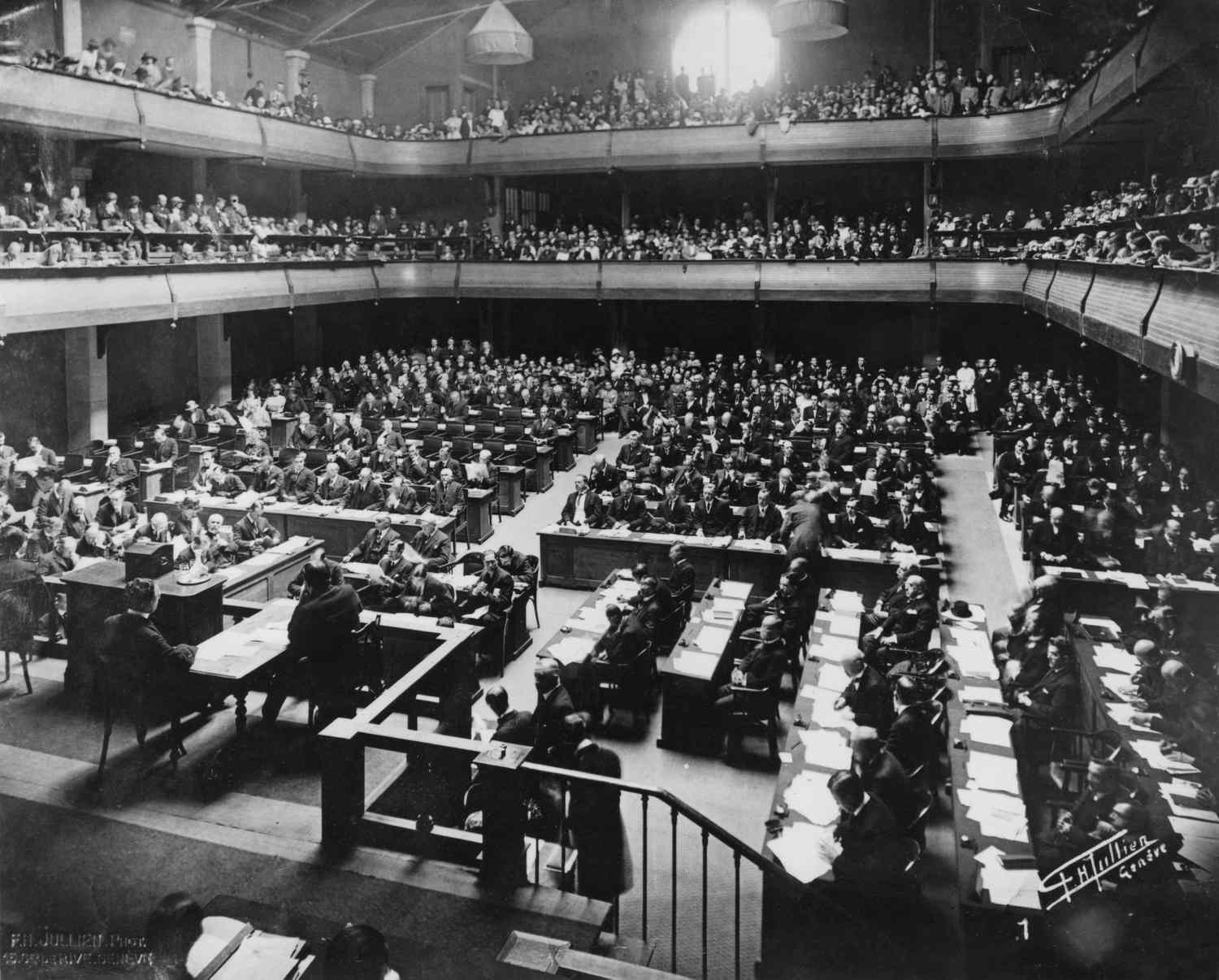
On January 10, 1920, the League of Nations formally came into being when the Covenant of the League of Nations took effect alongside the Treaty of Versailles. The League was the first intergovernmental organization established "to promote international cooperation and to achieve international peace and security." Its creation marked a fundamental shift in how nations approached conflict resolution and diplomacy after the unprecedented devastation of World War I.
The Covenant, signed on June 28, 1919, as Part I of the Treaty of Versailles, contained 26 articles covering membership conditions, principal organs, mechanisms for peaceful settlement of disputes, and obligations of member states. The document bound member states to settle disputes peacefully, renounce secret diplomacy, reduce armaments, and comply with international law.
Source: UN Geneva
The idea for the League originated with U.S. President Woodrow Wilson, who proposed it as the last of his Fourteen Points in a speech to Congress on January 8, 1918. Wilson called for "a general association of nations formed under specific covenants for the purpose of affording mutual guarantees of political independence and territorial integrity to great and small states alike."
With Europe exhausted after four years of total war, Wilson's vision was wildly popular. He traveled to the Paris Peace Conference in January 1919 as the first president to travel abroad in an official capacity, working with Georges Clemenceau of France and David Lloyd George of the United Kingdom to draft the Covenant. Wilson won the Nobel Peace Prize in 1919 for his role as the League's leading architect.
Source: Office of the Historian
Despite Wilson's central role, the United States never joined the League. Senate Majority Leader Henry Cabot Lodge led fierce opposition, fearing the League would commit America to expensive obligations and reduce its ability to defend its own interests. Lodge and his supporters wanted the United States to return to its traditional aversion to commitments outside the Western Hemisphere.
Wilson's personal dislike of Lodge poisoned any hope for compromise. In March 1920, the Treaty of Versailles and the Covenant were defeated by a 49-35 Senate vote. Nine months later, Warren Harding was elected president on a platform opposing the League. The absence of the United States significantly weakened the organization from its inception.
Source: Office of the Historian
The League held its first council meeting in Paris on January 16, 1920, just six days after officially coming into existence. On November 1, 1920, the headquarters moved from London to Geneva, Switzerland, chosen for its centuries of neutrality and its location in central Europe. On November 15, 1920, 41 member states gathered in Geneva for the opening of the first session of the Assembly, representing more than 70 percent of the world's population.
Over its lifetime, 63 states became members of the League, including Germany in 1926 and the Soviet Union in 1934. During the 1920s, the League successfully mediated minor international disputes and made important progress in areas such as health, drug trafficking, human trafficking, and labor conditions. These humanitarian efforts laid the groundwork for future United Nations agencies.
Source: History.com
The League's authority was seriously challenged in the 1930s when aggressive nations exposed it as ineffectual. Japan quit after its invasion of China was condemned. The League proved powerless to prevent German rearmament or Italy's invasion of Ethiopia. When World War II began in 1939, the League had become virtually defunct.
The League was formally dissolved on April 19, 1946, with its powers and functions transferred to the newly created United Nations. Though the League failed to prevent another world war, it pioneered concepts of collective security, international cooperation, and peaceful dispute resolution that became foundational to the UN.
January 10, 1920, marked humanity's first serious attempt to create a system of collective security. While the League ultimately failed its primary mission, it demonstrated that international cooperation was possible and paved the way for the more successful United Nations that followed.
Source: UN Geneva
.png)