On January 9, 2001, Apple CEO Steve Jobs introduced iTunes at Macworld in San Francisco, launching a media player that would revolutionize the way people consumed digital music and set the stage for Apple's transformation into an entertainment powerhouse.
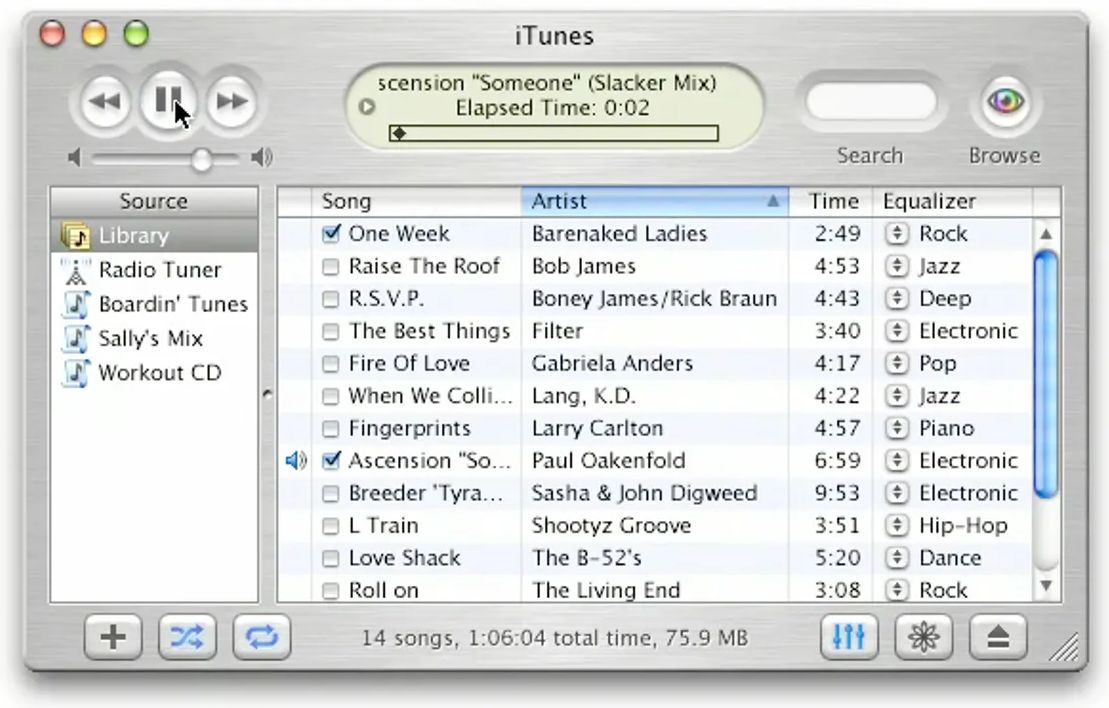
On January 9, 2001, at Macworld Expo in San Francisco, Steve Jobs unveiled iTunes, describing it as "the world's best and easiest to use jukebox software." The announcement came as part of Jobs's broader vision of the Mac as a "digital hub" that would connect various digital devices and content in users' lives. Jobs opened his presentation by noting that they were streaming the event at up to a megabit per second around the world, hinting at the digital future to come.
At the time, digital music was in chaos. People were ripping CDs into MP3 format, creating custom playlists, and burning songs onto writable CDs or portable MP3 players. However, existing music software was clunky and difficult to use. Jobs acknowledged that Apple was late to the party, stating, "We're late to this party and we're about to do a leapfrog."
Source: Cybercultural
Jobs positioned iTunes as the solution to a problem plaguing digital music fans. Existing applications like Windows Media Player 7 and Real Jukebox suffered from confusing interfaces and limitations. Most critically, Windows Media Player didn't even encode music in MP3 format, meaning users couldn't rip CDs into the most popular digital music format.
In Apple's press release, Jobs declared, "Apple has done what Apple does best: make complex applications easy, and make them even more powerful in the process. iTunes is miles ahead of every other jukebox application, and we hope its dramatically simpler user interface will bring even more people into the digital music revolution."
iTunes allowed Mac users to import songs from CDs, compress them into MP3 format, organize music with powerful searching and browsing features, watch stunning visualizations, and burn their own audio CDs, all in one application. The software was available as a free download exclusively for Mac users.
Source: Apple Newsroom
iTunes didn't emerge from nowhere. Its origins traced back to SoundJam MP, an MP3 player developed in the late 1990s by former Apple software engineers Bill Kincaid, Jeff Robbin, and Dave Heller. In 2000, Apple rehired the trio and tasked them with developing a similar player that would meet Jobs's exacting standards.
Jobs wanted something comprehensive with flexibility for arranging music, but also straightforward and easy to use. He particularly liked the idea of a search bar where users could type anything, an artist, a song, an album, and instantly find what they were looking for. This emphasis on user interface would become iTunes's defining characteristic.
Source: Cult of Mac
When iTunes launched in January 2001, there was no iPod and no iTunes Store. At that moment, nobody fully understood how significant iTunes would become. The software ran only on Macintosh computers and served simply as a tool for managing digital music libraries.
Everything changed in October 2001 when Apple introduced the iPod, a portable MP3 player that synchronized seamlessly with iTunes. The marriage of hardware and software transformed Apple's fortunes. Then, in April 2003, Apple launched the iTunes Store with version 4.0 of the software, creating a legal marketplace for purchasing digital music.
Jobs had made deals with the five major record labels to sell their content through iTunes. The fact that it was legal and profitable for the music industry, combined with the cultural cachet of the iPod, made iTunes an unqualified success. By 2006, more than one billion songs and videos had been sold through the iTunes Store.
Source: History.com
iTunes evolved far beyond its origins as a simple music player. Version 3 added smart playlists and audiobook support from Audible.com. Version 7 introduced gapless playback and Cover Flow in September 2006. In October 2003, version 4.1 brought iTunes to Windows, dramatically expanding its user base beyond Mac loyalists.
The iTunes Store became a premier marketplace not just for music, but for music videos, TV shows, movies, apps, and podcasts. Artists recorded exclusive singles and released albums early on iTunes. The iTunes Music Festival ran as a popular annual attraction from 2007 to 2016. iTunes had transformed from a music management tool into a comprehensive digital media ecosystem.
Source: Macworld
In recognition of the company's growing shift toward digital media and entertainment, Jobs officially changed the company's name from Apple Computer, Inc. to Apple Inc. on January 9, 2007, exactly six years after introducing iTunes. That same day, Jobs unveiled the iPhone, which incorporated an iPod and seamlessly integrated with iTunes.
iTunes marked the beginning of Apple's transformation from a struggling computer company into one of the world's most valuable corporations. The software laid the groundwork for the iPod, which paved the way for the iPhone, which became Apple's defining product. None of it would have been possible without iTunes establishing Apple's foothold in digital media.
Source: Britannica
As subscription-based streaming services like Spotify began to challenge iTunes in the 2010s, Apple responded by launching Apple Music in 2015. On June 3, 2019, Apple announced that iTunes would not be included in the latest version of its Mac operating system, effectively ending the application's 18-year run.
Though the era of pay-per-song downloads ended, iTunes had fundamentally changed the music industry. The program transformed what had been largely a black market of illegal file sharing into a vital organ of the legitimate music industry. Its crisp, user-friendly format changed how people consumed digital content and established the template for digital media marketplaces that followed.
January 9, 2001, marked the moment when Apple began its journey from a beleaguered computer maker to an entertainment and technology giant. iTunes proved that with the right combination of simplicity, design, and business model, even complex problems could be solved elegantly.
Source: History.com
.png)